
Samurai vs Vikings: who would win?
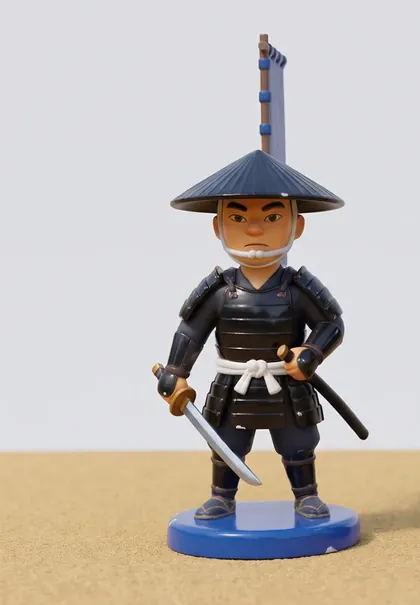
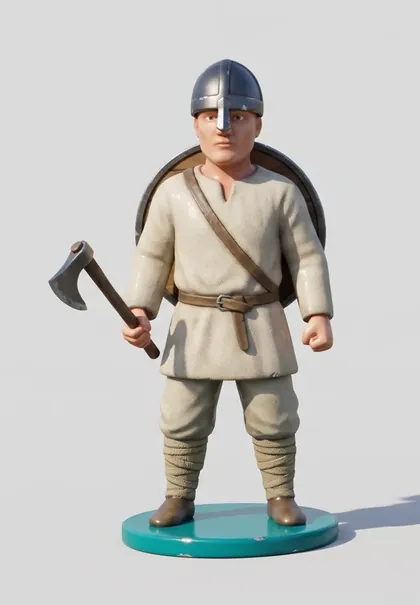
They never met. Their centuries overlapped, but they lived at opposite ends of the world and fought in opposite ways: the early samurai on horseback with a bow, the Vikings on foot behind a wall of shields, arriving by ship. Here is how each really fought, and our honest read of who would win.
When and where they fought
The Viking Age runs from about 800 to 1050, and it usually starts with the raid on Lindisfarne in 793. Vikings came from Denmark, Norway and Sweden. They raided and settled across the British Isles and in Normandy, Iceland and Greenland, briefly settled in Newfoundland, and traded down the rivers of eastern Europe as far as Constantinople.1 The Battle of Stamford Bridge, on 25 September 1066, is traditionally called the end of the Viking Age.2
The samurai grew up in Japan's Heian period (794 to 1185), when their long tachi sword and the naginata polearm came into use. Their first great war, the Gempei War, ran from 1180 to 1185, and the Kamakura shogunate that followed lasted until 1333. The samurai lasted far longer than the Vikings: Their class was only taken apart by Japan's reforms of the 1870s.3
So the two overlap in time, during the Heian period, but none of our sources records them ever meeting. By the time the samurai fought their first great war, the Viking Age was over.
Weapons
Vikings
Samurai
- "Traditionally, yumi (bows) were the main weapon of war in Japan."5
- The warrior's way was called "the way of the horse and bow".6
- The tachi hung from the belt, edge down, and worked best from horseback.7
- The naginata polearm is clearly recorded by 1146.8
- From the late 1400s the yari spear, the bow and later the gun did most of the fighting, and swords were for close combat.95
Armor
Most Vikings went to war in their everyday clothes, with the shield as their only real protection. Mail was very expensive and worn by men of status and wealth, and metal helmets may have been rare.4 And no horns: there is no evidence that Vikings wore horned helmets in battle. That picture comes from 19th century Romanticism,4 made popular by Richard Wagner's Norse operas.10 Our Vikings wear a round iron cap with a nose guard for the same reason.
The early samurai wore the ō-yoroi, a big, boxy armor made for archers on horseback that weighed around 30 kg.11 It was lamellar: small scales of leather or iron laced together with cord.12
How they fought
The Vikings: ships, raids and the shield wall
Viking longships could sail deep seas and shallow rivers, which let raiders strike far inland, up rivers like the Seine.1 In battle they stood shoulder to shoulder with their shields overlapping. The shield wall was strong while it held, but once the line broke, the whole formation tended to fall apart quickly.13 Cavalry was used with success against Viking foot soldiers in Europe,1 and at Stamford Bridge the Norse had left their armor behind, which left them at a real disadvantage.2
The samurai: the bow from horseback
The samurai's real test against a foreign army came with the Mongol invasions of 1274 and 1281. Samurai custom was to call out an enemy by name before fighting, which the Mongols ignored. The Mongols came in dense formations with drums, massed archery and exploding iron bombs that scared the horses. A defensive wall went up at Hakata in 1276, and in 1281 a typhoon struck the invasion fleet.14
So who would win?
This part is our read, not a sourced fact. It depends on where they meet.
On open ground, we would bet on the samurai. An armored archer on a horse can choose when to fight and shoot from out of reach, and most Vikings had little more than a shield between them and the arrows. Europe's own record backs this up: cavalry beat Viking foot soldiers there too.1
On a riverbank at dawn, we would bet on the Vikings. A raid was about picking the place and the time, and a samurai caught on foot, out of the saddle and without his bow, faces a wall of shields and axes on its terms.
Neither side ever had to find out. On our table they do.
How they fight in Footmen Wars Online
- Samurai. First Strike: +60% on the first hit on each new target, 10% less HP. Their line is the Ashigaru Swordsman, backed by the Yari Spearman and the Ashigaru Bowman.
- Vikings. Fury: up to +40% damage near death; spawn 10% faster with 15% less HP. Their line is the Axeman, and their elite is the Bear-Shirt.
These are the current build's numbers, and we are still tuning them.
Sources
- Viking Age, Wikipedia
- Battle of Stamford Bridge, Wikipedia
- Samurai, Wikipedia
- Viking Age arms and armour, Wikipedia
- Katana, Wikipedia
- Kyūjutsu, Wikipedia
- Tachi, Wikipedia
- Naginata, Wikipedia
- Yari, Wikipedia
- Horned helmet, Wikipedia
- Ō-yoroi, Wikipedia
- Japanese armour, Wikipedia
- Shield wall, Wikipedia
- Mongol invasions of Japan, Wikipedia
Your barracks is ready
Early access: free to play in your browser while we keep building it. Bots fill every empty seat.