
Knights vs Samurai: who would win?
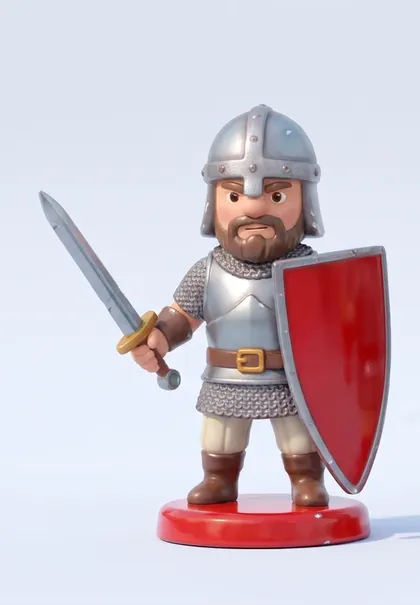
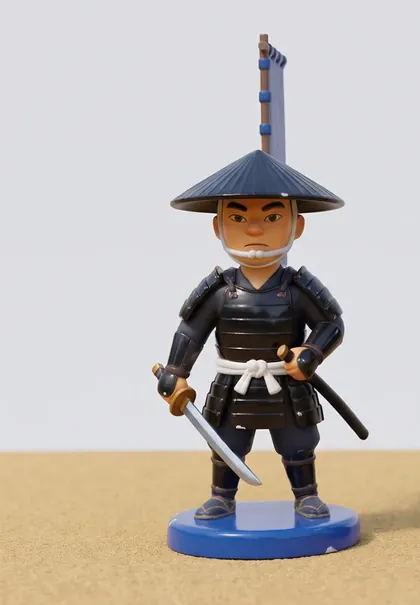
Two armored warriors on horseback, on opposite ends of the world, for hundreds of years at the same time. Both were pushed aside in the end by massed infantry with pikes and guns, and their worlds only touched at the very end. Here is how each really fought, and our honest read of who would win.
When and where they fought
The first knights appeared in the 8th century, under Charlemagne, and knighthood as a rank took shape in the 12th century. By the late 1400s knights were becoming obsolete, as pikes, cannon and standing armies spread; the Swiss pikes that beat Charles the Bold at Nancy in 1477 are a famous case.1 Plate armor itself began to fade in the early 1600s.2
The samurai rose in Japan's Heian period (794 to 1185) and fought their first great war from 1180 to 1185. Japan's long civil war, the Sengoku period, began with the Ōnin War in 1467, and peace came after 1615.3
Did knights and samurai ever fight?
Not as knights against samurai. The first Europeans to reach Japan were Portuguese traders in 1543.4 Two Portuguese adventurers on a Chinese ship, blown off course by a storm, landed on the island of Tanegashima. The local lord bought two of their guns and had them copied.5
- In 1565, at Fukuda Bay, samurai of the Matsura clan attacked a Portuguese carrack and galleon. It is the first recorded naval battle between Europeans and Japanese, and the Portuguese won.6 Those were sailors and merchants, not knights.
- In 1582, Spanish forces in the Philippines fought pirates at Cagayan, and some of the pirates were Japanese ronin. Wikipedia is clear that the fight "featured neither samurai nor tercios".7
- From 1613 to 1620 the samurai Hasekura Tsunenaga led an embassy to Spain and Rome, meeting King Philip III and Pope Paul V in 1615.8 By then knights no longer charged across battlefields.
Weapons
Knights
Samurai
- The bow first, from horseback: "the way of the horse and bow".10
- After the Ōnin War, the yari spear, the bow and the gun did most of the fighting.11
- Swords were for close combat.12
- Japan took to guns fast. Oda Nobunaga ordered 500 in 1549, and at Nagashino in 1575 about 3,000 gunners fired in volleys.5
Armor
Until the mid-1300s knights wore mail as their main armor, with plate pieces appearing from the 1200s.1 Mail needed a padded coat under it and did little against blows to the head.13 By about 1420 there were complete suits of plate. A full suit weighed around 15 to 25 kg, and the man inside stayed highly agile.2
The early samurai's ō-yoroi weighed around 30 kg and was built for archers on horseback. It fell out of favor in the 1400s.14 Japan used mail too, called kusari, from at least the time of the Mongol invasions in the 1270s.13 When guns arrived, Japanese armor changed with them: mass-made suits spread in the 1500s, and some were even made to look like Portuguese armor.15
How the charge ended, on both sides
In Europe, infantry took the field back. At the Battle of the Golden Spurs in 1302, Flemish militia on foot beat an army of French knights.16 At Crécy, Poitiers and Agincourt, English longbows did the damage, with the knights fighting dismounted in the center. Whether arrows could get through plate is still argued, and well-made plate could protect against them.17
In Japan, the samurai moved from horse archery toward fighting on foot,14 and by the second half of the 1500s armies fielded drilled ranks of foot soldiers, the ashigaru, with long spears.11 Within about fifty years of the first guns arriving, Japanese armies used more guns than any European army of the time.4
So who would win?
This part is our read, not a sourced fact. It depends on the century.
One on one, on foot, around 1450: we would lean to the knight in full plate. Good plate was hard even for longbows to get through,17 and a full suit was lighter than the old ō-yoroi.214
On horseback around 1200, it is closer. The knight's couched charge was built to smash a line, and the samurai's bow was built to hit him before he got there. We would call it even, and decided by the ground.
Army against army around 1575, bet on the samurai's side. By then Japan had thousands of guns firing in volleys5 and armor that had changed to meet them,15 while in Europe the knight was already giving way to pikes and guns.1
How they fight in Footmen Wars Online
- Knights. Steel: 15% less pierce damage, 5% slower. Their line is the Man-at-Arms, their archers the Longbowman, and their elite the Lancer.
- Samurai. First Strike: +60% on the first hit on each new target, 10% less HP. Their line is the Ashigaru Swordsman, and their elite the Armored Samurai.
These are the current build's numbers, and we are still tuning them.
Sources
- Knight, Wikipedia
- Plate armour, Wikipedia
- Samurai, Wikipedia
- Nanban trade, Wikipedia
- Tanegashima (Japanese matchlock), Wikipedia
- Battle of Fukuda Bay, Wikipedia
- 1582 Cagayan battles, Wikipedia
- Hasekura Tsunenaga, Wikipedia
- Couched lance, Wikipedia
- Kyūjutsu, Wikipedia
- Yari, Wikipedia
- Katana, Wikipedia
- Mail (armour), Wikipedia
- Ō-yoroi, Wikipedia
- Japanese armour, Wikipedia
- Battle of the Golden Spurs, Wikipedia
- English longbow, Wikipedia
Your barracks is ready
Early access: free to play in your browser while we keep building it. Bots fill every empty seat.